
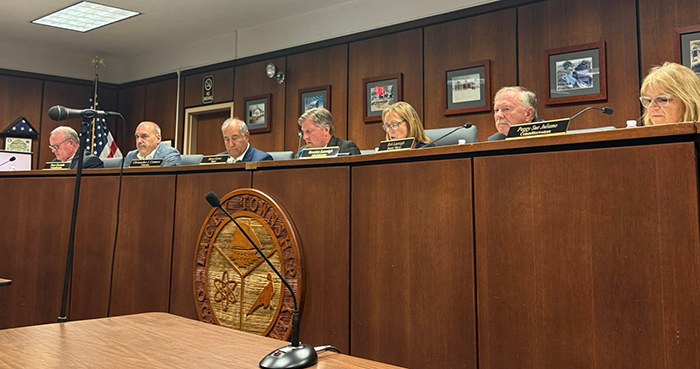
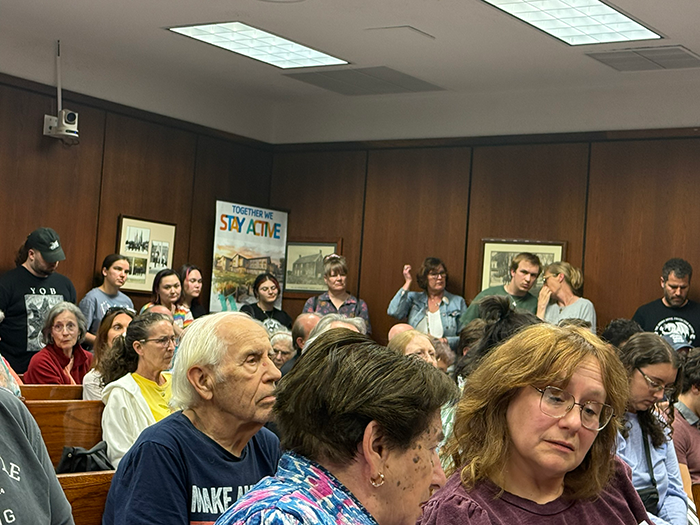
LACEY – A simple agenda item discussing data centers triggered a social media firestorm in Lacey, drawing a packed crowd of residents fearful that the former Oyster Creek Nuclear Generating Station property could someday become home to one of the massive artificial intelligence facilities rapidly spreading across the country.
Residents flooded a recent Township Committee meeting with concerns about rising electric bills, groundwater depletion, noise pollution, wildfire risks and industrial overdevelopment after online speculation tied the discussion to the Oyster Creek site.
Early on, officials repeatedly stressed no proposal has been submitted for a data center anywhere in Lacey. “Nothing has been proposed for the power plant property,” added Mayor Steve Kennis. “There’s a process they would have to go through. They’re still decommissioning the plant, so there’s been no proposals for anything at the plant.”
Still, the controversy revealed how quickly data centers have become one of the most emotionally charged land use and environmental debates facing communities throughout New Jersey.
Why Residents Became Alarmed
The issue exploded locally after Kennis attended a Zoom presentation hosted by the Pinelands Preservation Alliance and the Pinelands Municipal Council. According to Kennis, he was one of only three mayors who participated in the call.
The presentation focused on increasing pressure for data center development throughout South Jersey and the importance of municipalities proactively reviewing zoning and land use protections before formal applications emerge. Kennis told the committee that the discussion largely involved Pinelands property west of the Garden State Parkway.
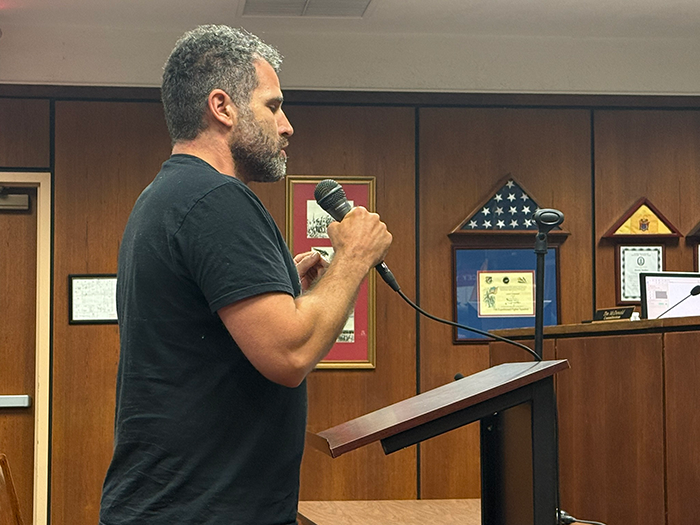
Jason Howell of the Pinelands Preservation Alliance was at the Lacey meeting and urged local officials to follow other New Jersey towns that have already moved to prohibit data centers.
Howell said he has participated in discussions in multiple municipalities where officials concluded that large-scale AI facilities were a poor fit because of their heavy demand on electricity and water supplies.
“These things are actually competition for resources,” Howell said. “The same resources that we depend on as humans, they are building essentially an alternative life form that competes for that same resource.”
While acknowledging the comparison sounded extreme, Howell argued that modern AI facilities are far different from traditional server farms. “It’s not like just the server farms of the 1990s,” he said.
Howell pointed to communities including Monroe Township, Waterford Township and Millville that have either adopted or considered restrictions on future data centers.
Across New Jersey, data center projects are already generating heated battles. In Kenilworth, a nearly $1.8 billion data center tied to the former Merck campus has sparked backlash over concerns involving electrical demand, noise and environmental impacts. Vineland residents have also opposed one of the state’s largest proposed AI facilities.
Environmental Warning
Concerns voiced by residents mirrored growing opposition already unfolding in other New Jersey communities. Many of those who attended the meeting said they wanted the township to act before any proposal emerges.
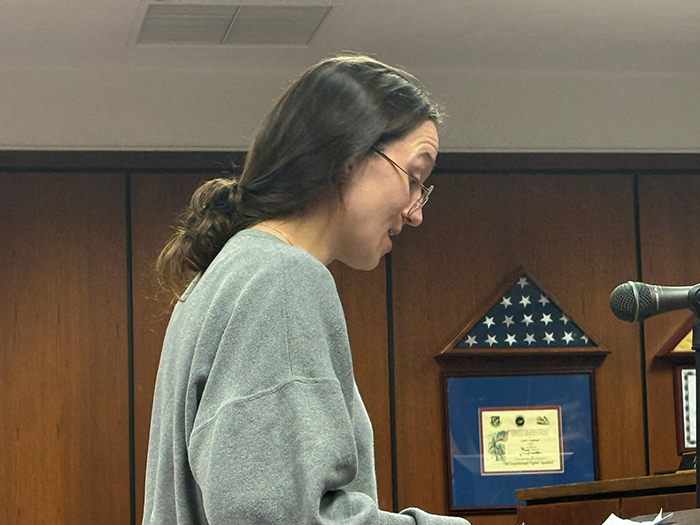
Caitlin Allsopp said she grew up in Lacey and spoke on behalf of family members who still live there. She urged officials to ban data centers township-wide, warning they consume enormous amounts of electricity and water while providing few permanent jobs.
“Residents’ quality of life is being destroyed by data centers built in their towns, and it can happen here,” she said.
She also expressed concern about impacts to local waterways, electrical infrastructure and property values before asking officials, “Please don’t sell us out to big tech.”
Forked River resident Teresa Barry warned officials that some communities elsewhere approved warehouses only to later see those facilities converted into data centers. “We have to be cautious that no one slips in with a permit application for a giant warehouse and then tries to convert it to a data center,” she said.
Theresa Brostow of Lanoka Harbor is an environment engineer, whose father worked at Oyster Creek for more than 25 years. She urged officials to enact protections sooner rather than later. “We’re dealing with both a statewide drought and an energy crisis, as well as an overdevelopment crisis,” she said.
Industry Perspective
Not everyone in attendance opposed the facilities. Marty Hastings, a mechanical engineer and local resident said he has worked in data center operations for more than 30 years, urged residents to keep an open mind.
“All I’m asking is just people do the research and learn about data centers,” Hastings said.
Hastings argued that modern facilities are heavily regulated for noise and environmental impacts and can provide economic benefits to communities.
“A data center actually brings lower taxes,” he said. “It brings revenue to town, brings the jobs.”
He also blamed New Jersey’s energy challenges partly on Oyster Creek’s closure. “The reason why our rates are going up in the state is not because the data centers, but it’s actually because when they closed down this nuclear facility down the road, we lost 650 megawatts of utility,” Hastings said.
Legal Considerations
“Right now, data centers are not allowed,” Kennis explained. “There’s not much allowed west of the Parkway, but that doesn’t mean somebody can’t try to get a variance.”
“It would be extremely hard and rare if they were able to do so,” he added. “But I’ve talked about this many times from this position. You have to make decisions now that are going to affect land use 10 years down the road.”
Township Attorney Christopher Connors offered further insight into land use laws. “If the zoning ordinances in a town do not provide for data centers as a permitted use,” Connors said, “my argument to the court would be that the state of law in New Jersey is such that it is prohibited.”
Connors explained that unless a particular land use is explicitly permitted within municipal zoning ordinances, developers cannot simply assume approval.
Deputy Mayor Robert Laureigh emphasized committee members are still in the early stages of discussing the issue and have not reached any consensus about whether a future ban should apply only west of the Garden State Parkway or throughout all of Lacey.
Laureigh, a lifelong resident, said protecting the character of the community is personally important to him and acknowledged concerns that even environmentally protected areas can become vulnerable when political pressure and development interests intervene.
He urged residents not to assume the committee had already decided on a course of action and emphasized officials are still gathering information and listening to public feedback.
“I’m here for you guys,” Laureigh said. “I’m not here for big business, I’m not here for tech. I live in South Jersey because I like the rural South Jersey.”
The post AI Data Center Fears Spark Packed Ocean County Meeting appeared first on Jersey Shore Online.