

HOWELL – For 24 Hours, Echo Lake Park became more than just a local recreation spot. It became a hub for radio signals, emergency preparedness and family-friendly learning as the Ocean-Monmouth Amateur Radio Club hosted its annual Field Day event.
The event gave visitors a chance to see amateur radio in action. The free event was open to the public, rain or shine, with activities held indoors and families invited to stop by throughout the day.
For club members, Field Day is both a national tradition and a practical exercise. Amateur radio operators across the country take part by setting up temporary stations in parks, fields, parking lots and other public spaces. The goal is to practice operating under conditions that may resemble an emergency, including using alternate power sources such as generators, batteries and solar energy.
At the Howell event, club members operated radios using emergency power while speaking with other operators from across the country. Visitors were able to watch the process, ask questions and learn how radio communication can continue working even when cell phones, internet service or electricity are unavailable.
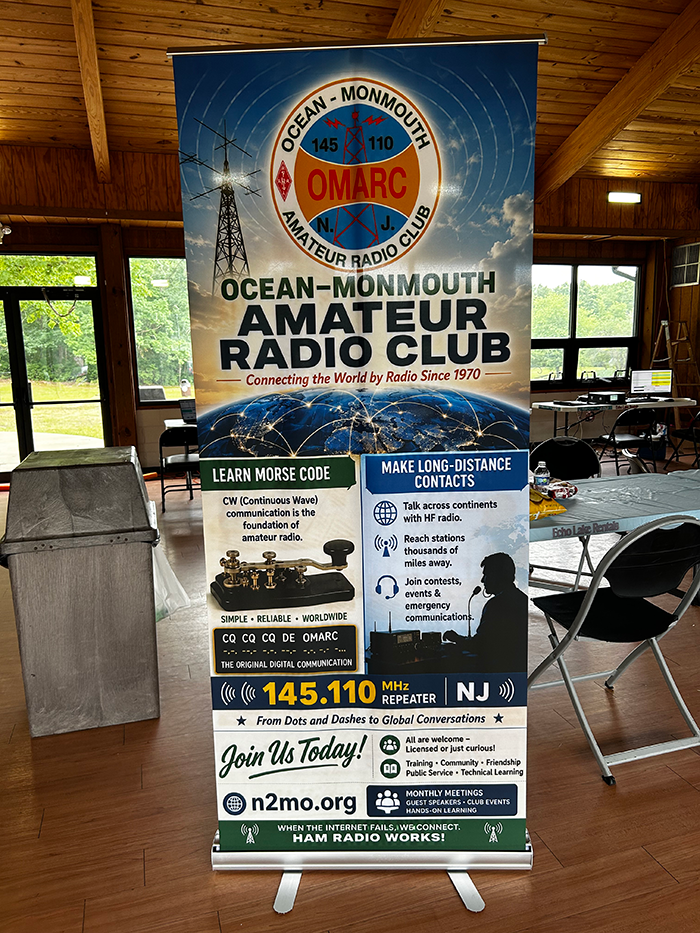
“We run this event every year to set up and make sure our equipment is working,” said event organizer and Morse code operator Denis O’Brien. “We hope visitors become more aware of what we can do in an emergency situation. We can provide emergency communication when other forms of communication are not available. We have a lot of equipment, a lot of capabilities, a lot of expertise, and we know what to do when an emergency happens.”
While emergency communication is a major part of the event, organizers also emphasized the fun and educational side of ham radio. Families had the chance to take part in hands-on demonstrations , including Morse code activities, and children and adults were invited to get on the radio and make a contact themselves.
The interactive piece is part of what makes Field Day appealing to people who may not know much about amateur radio. For some visitors, it is a chance to try something new. For others, it is an introduction to a hobby that combines technology, public service and communication with people from around the world.
“Field Day is something they hold on the same day every year, where radio operators set up outdoors or in a remote area,” said visitor Richie Krug, a recently retired electrical engineer from North Brunswick. “It’s sort of like a contest to see how many contacts you can make in 24 hours from a remote location.”
Krug also explained the tradition of QSL cards, which are exchanged between operators as a record of radio contact.
“Each radio station or operator may have a card, and you can send those cards to the other party as documentation of the contact you made,” he said. “People save them almost like baseball cards.”
Club members explained that ham radio remains relevant even in an age of smartphones and instant communication. During storms, natural disasters or widespread power outages, traditional communication systems can become overloaded or fail. Amateur radio operators are often able to assist by relaying information when other systems are down.
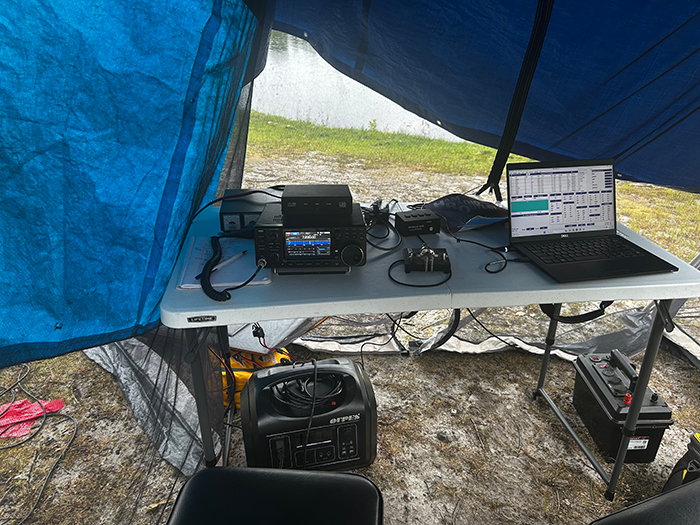
That emergency role has long been part of amateur radio’s identity. Operators train to communicate clearly, work with limited resources and adapt to changing conditions. Field Day gives them a chance to test those skills while also showing the public how the equipment works.
“We hold this event as part of emergency preparedness,” said radio operator and club president Scott Thompson, of Point Pleasant Beach. “What happens during Hurricane Sandy? What happens when there is a major disaster? We can set up in the field. We can run on generators. Right now, I’m running on solar power.”
He said amateur radio operators were active during Sandy, helping relay messages when other forms of communication were limited.
“We were sending messages saying, ‘Hey we’re OK,’” Thompson said. “The farthest contacts I’ve made have been South America, Brazil, South Africa and Japan. We want visitors to know not to be afraid of it. It’s something anybody can learn. It’s a cool hobby.”
The Ocean-Monmouth Amateur Radio Club’s event also showed that ham radio is not just for experienced operators. With demonstrations, conversations and opportunities to participate, Field Day offered a welcoming environment for beginners and curious families.
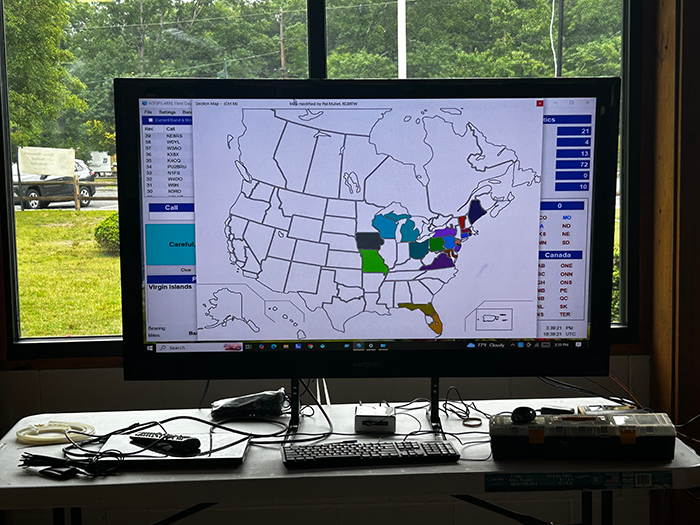
For children, the event provided a hands-on look at communication beyond cell phones and tablets. For adults, it served as a reminder that reliable communication can be critical during emergencies. And for radio operators, it was a chance to practice, connect and share their passion with the community.
By bringing together education, public service and family participation, the annual Field Day event highlighted the lasting value of amateur radio. Whether used as a hobby, a learning tool or a lifeline during emergencies, ham radio continues to give people a way to stay connected when it matters most.
For more information about the Ocean-Monmouth Amateur Radio Club, visit n2mo.org.
The post Ham Radio Event Prepares Jersey Shore For Emergencies appeared first on Jersey Shore Online.
