

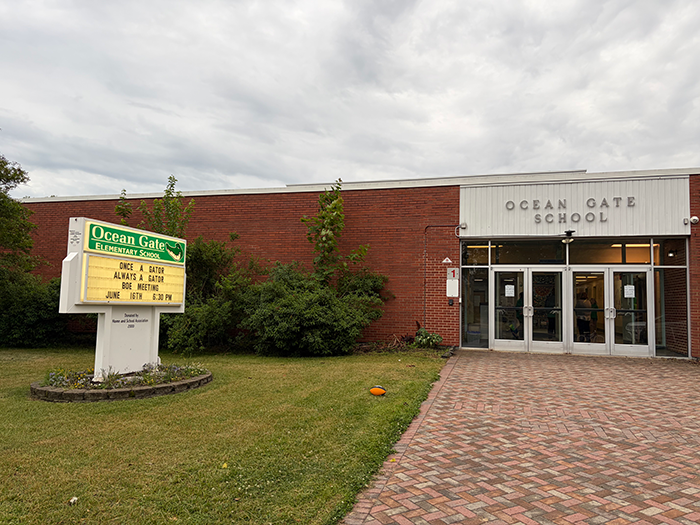
OCEAN GATE – The Ocean Gate School closed to students in June, which leaves the residents asking what comes next?
Should the school building remain intact? Should it be demolished to make way for something else? Would new ratables lower taxes? Are there needs that a community center could address?
Residents met recently to hear a discussion about possibilities and give their opinion to the borough’s leaders. People have been speaking about it a lot lately but this particular meeting had all of the comments recorded formally for this topic.
Planner Tara Paxton led the meeting with a presentation bringing residents up to speed on what has been done so far and laying out future options.
The Borough Council has declared that the land is an area in need of redevelopment, she said.
This “redevelopment” designation brings more control to the property owners. A simplified version is that it allows the town to make the plans, rather than a developer bringing in plans.
Mayor Bob Curtin spoke several times during the meeting to give residents an idea of what the governing body is thinking. For example, earlier in the day he had met with the Boys and Girls Clubs of Monmouth County who were interested in using the school property as they expand into Ocean County.
The county government has also expressed interest in the school gym and classrooms hosting county recreation programs, he said. The local historical society would like to have a portion of the school dedicated to the history of the school. There’s also an idea about having a reading program in the one-room schoolhouse.
None of these options are done deals, but they are examples of what the governing body has in mind for the property, Curtin said.
One of the property lots, Lot 4, is where the playground is. That’s owned by the town, the mayor said. Lot 5 is owned by the Ocean Gate Board of Education. An agreement would convey that property to the town. The town would assume $400,000 in debt the school had and would pay that off with a 30-year bond. The end result in all of this is that there would be one owner – the town. School taxes would decrease but municipal taxes would have a small increase.
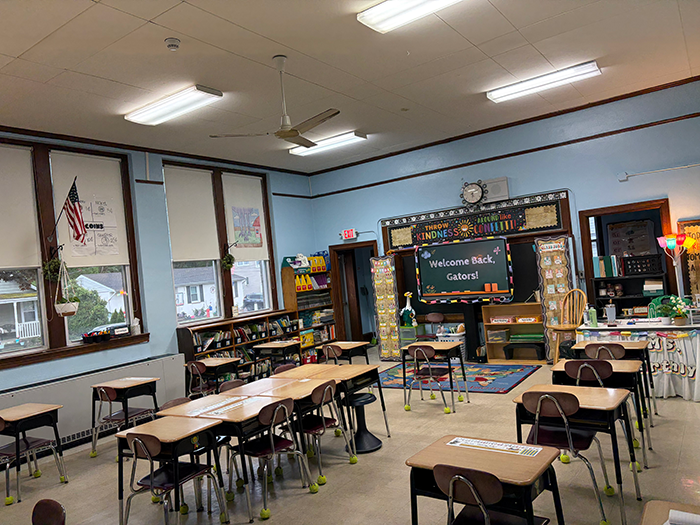
The Ocean Gate Board of Education would still exist, because they are needed to determine where to send students, Curtin said. Although the deal is already in place to send elementary kids to Berkeley Schools and older ones to Central Regional, a school board needs to be in existence. Additionally, special needs children might need to be sent out of district, and a school board is necessary to address that.
About 55 people were in attendance, although some were officials.
Theresa O’Neill advocated for a branch of the Ocean County Library. Michelle Dillon, who retired a few years ago as the school’s art teacher, asked that the mosaic be preserved. A child suggested that Beachwood and Ocean Gate could get together and turn it into a police station. A real estate agent had a learning center as a client that could bring in about $22,000 a month.
William Quinn asked about operating costs of the town running it, versus renting out the space to various community groups.
The mayor said that they would have to hire a third Public Works employee to take care of the property. He said that the borough’s Chief Financial Officer, Fred Ebenau, went through the 2026 budget to get an idea of costs and make sure it’s workable.
Another resident, Paul Stanley, worried about affordable housing being forced onto the land by the state.
Every town in New Jersey is required to set aside a certain number of units of affordable housing based on a complicated formula. Every ten years is a new round and a new number of units.
An attorney representing the town said that if a town doesn’t meet that number, they are more vulnerable to a lawsuit where a developer could force themselves in, but the borough has met its burden of units so it would be very unlikely.
Paxton said that a developer could always sue a town even if they are compliant with affordable housing. However, a redevelopment plan is affirmative action, with the borough stating clearly that the land would be for the public’s use, so it would form a strong barrier to a builder trying to claim the land in court.
Resident Carolyn Severino relayed the story of how locals fought against a development on Louis Avenue, on the Berkeley side of the border, and the developer won.
“Will it be untouchable?” she asked of the school. “Money talks and people can basically pay what they want and get what they want in certain towns.”
Paxton said since the town will be the property owner, no changes to it will happen without the town wanting it.
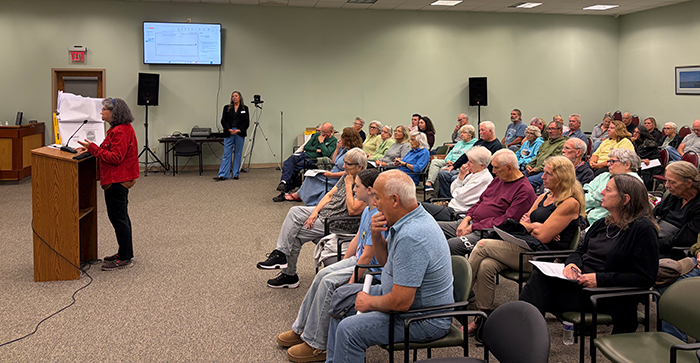
Residents have voiced their opinions – and fears – about the future of the property before, but this meeting was an official public hearing, Paxton said. A questionnaire was in the back room. Attendees were also invited to break out into small group discussion after the presentation. She added that there will be more opportunities for people to make their feelings known.
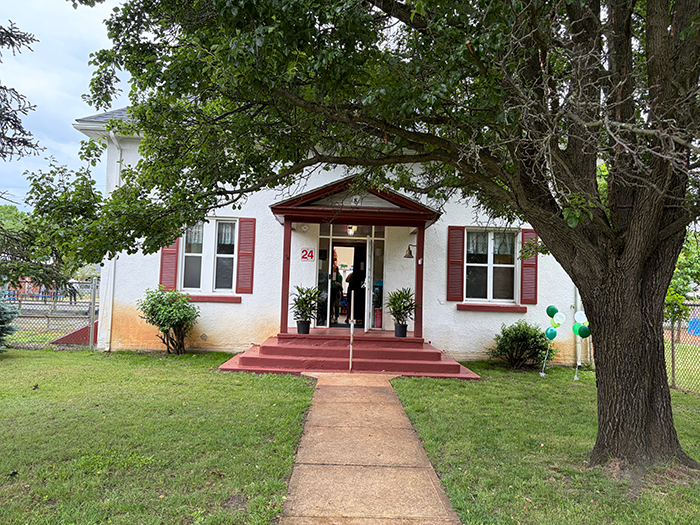
The first school in the borough, the one-room schoolhouse was built in 1914. It was used as the kindergarten building when it closed.
The school’s website notes that the two-room schoolhouse was built in 1940. A third building opened in 1968, followed by an expansion in 1994. But times have changed, and state aid dropped drastically. A district that kept needing more space now has about 150 students. A referendum in January asking voters for more than $600 a year to keep it open was voted down 393 to 186.
The post What Do You Do With A Closed School? appeared first on Jersey Shore Online.