

TOMS RIVER – In Toms River, the debate over police staffing has become something far larger than the number of officers on patrol.
Behind the ordinance now moving through the Township Council is a deeper conflict that has left the town’s government locked in a stalemate. Majority council members say they do not trust the township attorney appointed by Mayor Daniel Rodrick. The mayor insists the individuals he refers to as the “Mo Hill gang” are attempting to bypass the law and interfere with executive authority.
Rodrick has been blunt in his criticism of the council majority.
“You can’t force me to hire people,” Rodrick said during one council meeting discussion about the proposed police ordinance. “It’s against the Faulkner Act.”
The dispute highlights the tension that can arise under Toms River’s Faulkner Act mayor-council form of government, where the mayor serves as chief executive while the council acts as the legislative branch.
All members of the governing body are Republicans but from two camps. Mayor Rodrick, his administration, and three council members (Harry Aber, Craig Coleman, Lynne O’Toole), are on one side and four council members (Council President David Ciccozzi, Robert Bianchini, Clinton Bradley, Thomas Nivison) are on the other.

Dispute Over Legal Representation
Township Attorney Jonathan Penney, who was appointed by Rodrick, serves as legal counsel for the municipality. Penney said members of the council majority have chosen not to consult him on legislation.
“I can confirm that Council President David Ciccozzi, Council Vice President Thomas Nivison, as well as councilmen Bianchini and Bradley have never once come in to discuss legislation with me,” Penney said. “I’ve made it clear to them that I’m here to serve the town and that I’m available every day.”
Penney also pointed to New Jersey statutes governing mayor-council municipalities.
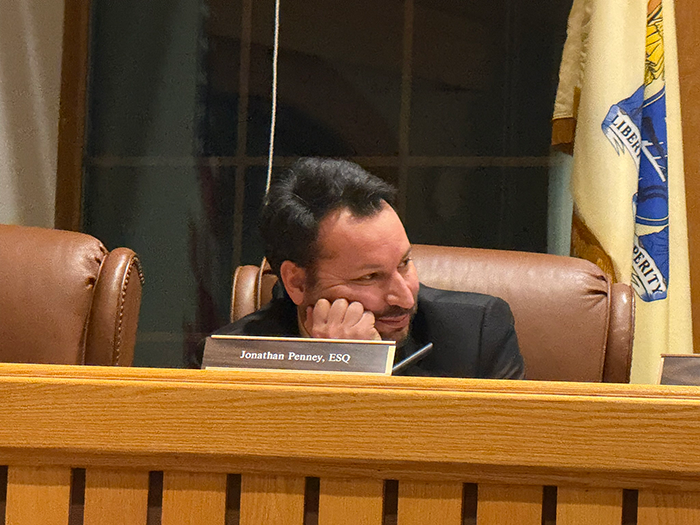
“The statutes on separation of powers in a Mayor-Council form of government could not be clearer,” he said. “The mayor has full managerial and supervisory control over township personnel except for the clerk, deputy clerk and tax assessor.”
Proposed new laws have been drafted without going through the township attorney’s office. Council President Ciccozzi acknowledged he helped prepare the police staffing ordinance with assistance from another attorney whose identity he declined to disclose.
Rodrick said he doubts that name will be revealed. He suggested the person helping draft the ordinances is a workers compensation attorney from a firm that does not allow moonlighting and has little experience with municipal law.
“They have zero municipal experience,” Rodrick said. “So, they don’t really understand how municipal law functions.”
A Council Attorney
Tensions over legal representation were evident earlier this year when the council majority attempted to hire its own attorney to advise the legislative body independently from the mayor’s administration.
Supporters said the council needed independent legal advice in order to properly fulfill its role as the township’s legislative branch. The proposal did not ultimately move forward, but it underscored the growing distrust between the council majority and the mayor’s administration.
That conflict has continued to play out during public meetings. During the February 25 council meeting, Ciccozzi cut off Penney as the discussion turned to legal questions surrounding the police ordinance. Ciccozzi told the township attorney to “be quiet,” signaling that he did not want Penney weighing in on the matter.
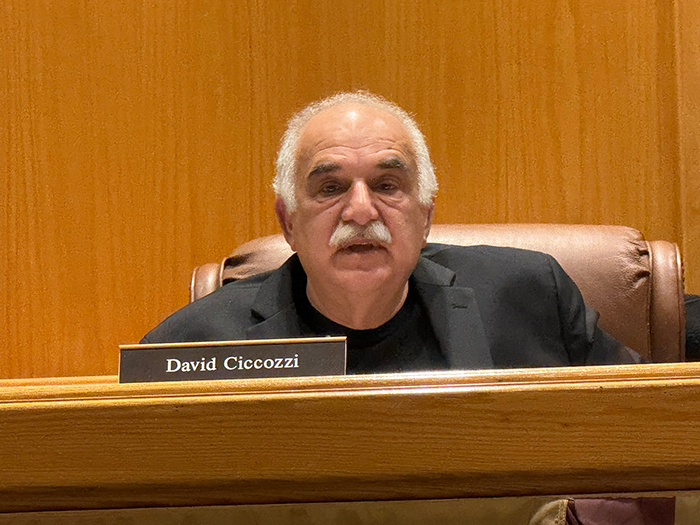
Rodrick also spoke several times despite requests from Ciccozzi to hold off on his remarks. Some of the audience members shouted from their seats. The council president ultimately called a recess in an effort to calm the situation before the meeting resumed.
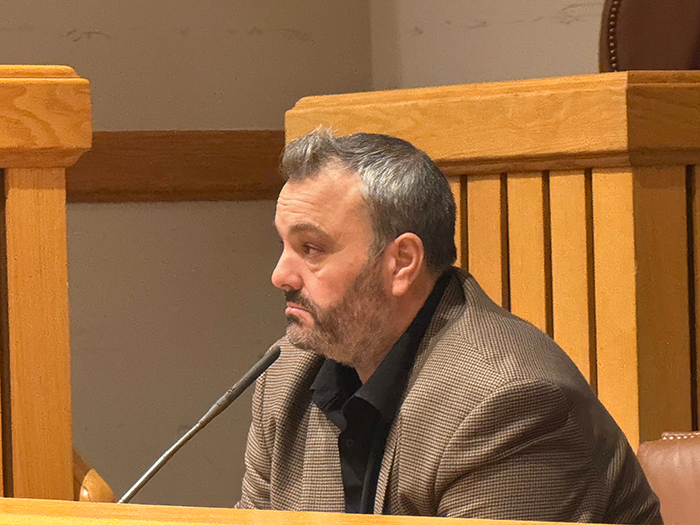
Later in the meeting, another exchange between Councilman Bradley and Penney grew personal. As the discussion concluded, Bradley referred to the township attorney as “demonic.”
Police Staffing
The ongoing conflict between the mayor and the council majority continued in the form of a debate over police staffing. The ordinance introduced by the council would require the township to maintain a police department with 162 sworn officers. It would also require the administration to fill vacancies within 90 days if staffing levels fall below that threshold.
Supporters say the measure is intended to restore staffing levels that once existed in the department and ensure adequate police coverage for residents.
Rodrick strongly opposes the ordinance. He argues that the council does not have the authority to mandate hiring decisions and says the proposal would force the township to create additional supervisory positions that are unnecessary and costly.
According to the mayor, captain level positions can cost more than $400,000 annually when salary, benefits and pension obligations are included.
“We’re using that money to continue putting boots on the ground,” Rodrick said. “Interviews are underway to replace recent retirements. When we are through, there will be more patrolmen in town than ever before.”
Rodrick has also raised concerns that some actions taken by the council majority may be politically motivated.
He has accused the council majority of attempting to create a municipal position for Noriko Kowalewski, who he said worked on their campaign. According to Rodrick, the job had not been requested by township staff and was not identified as a need within the administration.
“This job was never requested by the clerk, never requested by the administration and never identified as something the township needed,” Rodrick said.
Council members have denied that Kowalewski worked on their campaigns and say Rodrick was aware of the liaison-style position being discussed. Although the council majority approved the hiring, Rodrick vetoed the appointment.
Government Stalemate
Toms River operates under New Jersey’s Faulkner Act mayor-council form of government.
Under this system, the mayor serves as the chief executive responsible for administering municipal operations, hiring personnel and managing township departments. The council functions as the legislative body responsible for passing ordinances, approving budgets and setting policy.
The structure is designed to create checks and balances between the two branches of government. However, when the mayor and council majority disagree on key issues, the system can also lead to stalemates.
That dynamic has become increasingly visible in Toms River as the two sides clash over legal authority, policy decisions and political priorities.
The police staffing ordinance must still go through a public hearing and second vote before it could become law. If adopted, Rodrick has said he will veto it.
The council would then need a fifth vote to override that veto.
*Editor’s Note: This story was written and appears in this week’s edition of The Toms River Times – there was a meeting on March 11th – stay tuned for that story coming soon.
The post Inside Toms River’s Growing Government Stalemate appeared first on Jersey Shore Online.