

TOMS RIVER – The debate over how Toms River will meet its state-mandated affordable housing obligations unfolded over two tense nights at Town Hall, drawing large crowds, heated exchanges, and a series of votes that left residents questioning whether the township’s plan had actually passed.
The first public sign that Mayor Daniel Rodrick’s affordable housing strategy was encountering resistance came not during the Township Council meeting, but the night before, when the Planning Board took up the matter.
Both Rodrick and Councilman Clinton Bradley sit on the Planning Board, placing them together on the dais during the board’s review of the township’s amended Housing Element and Fair Share Plan and related zoning recommendations. The board’s role was limited to determining whether the proposals were consistent with the township’s master plan before forwarding them to the governing body.
When the votes were called, Bradley was the sole Planning Board member to oppose both effectuating the township’s plan and recommending the creation of a new multifamily zone.
Residents who attended the Planning Board hearing later said they received text messages from Rodrick during the meeting urging them to follow the debate closely and warning that the township could face serious consequences if the plan failed.
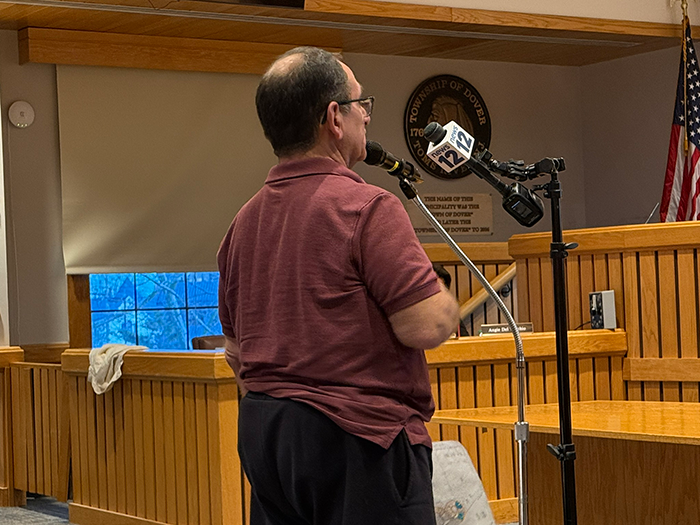
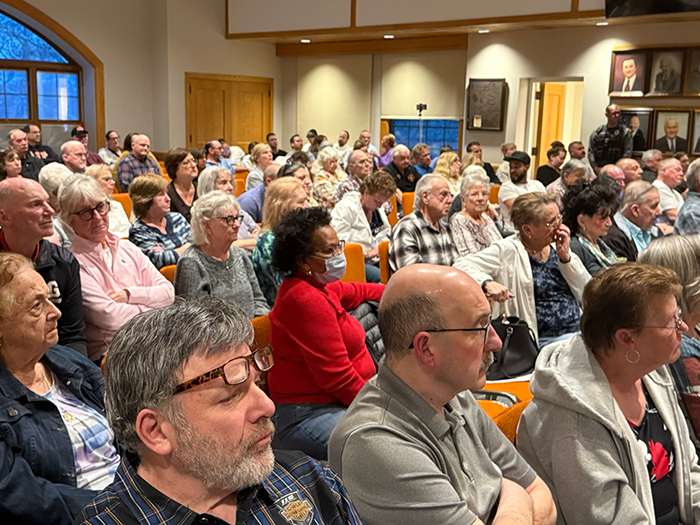
Those tensions spilled into the Township Council meeting the following night, where a standing-room-only crowd packed the chamber for a session that stretched more than four hours.
The Plan Behind the Debate
At the center of the controversy is Toms River’s fourth-round Housing Element and Fair Share Plan, which must satisfy the state’s affordable housing mandates under the Mount Laurel doctrine.
Toms River faces two obligations: the rehabilitation of 526 existing substandard housing units and the provision of a realistic opportunity for 649 affordable housing units between 2025 and 2035.
Rodrick said the township negotiated a strategy designed to limit new construction by extending affordability controls on existing housing. According to the mayor, the township would meet much of its obligation by extending deed restrictions on hundreds of existing affordable units while constructing roughly 183 new affordable homes.
A major component involved the Hope’s Crossing apartment complex, which was expected to extend affordability restrictions on existing units for another 30 years. But that arrangement collapsed shortly before the council vote. Rodrick said the developer backed out of the agreement, forcing the township to identify additional zoning options before the state deadline.
That change added several potential sites to the plan, including township-owned land on Route 9 and two parcels near the Lake Ridge community along Route 70 and Massachusetts Avenue.
Council Majority Requests Extension
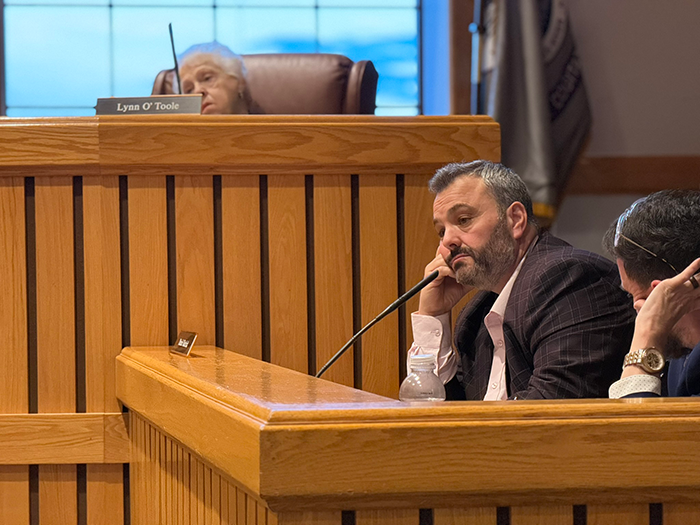
Council President David Ciccozzi and three other council members documented their concerns in a letter dated March 12, 2026, addressed to Rodrick and township affordable housing attorney Christopher Zingaro. The letter was signed by Ciccozzi, Council Vice President Tom Nivison, and Councilmen Robert Bianchini and Clinton Bradley.
The council members said they were committed to meeting the township’s constitutional obligation to provide affordable housing while minimizing density impacts and protecting the community from builder’s remedy lawsuits.
They asked the township’s affordable housing attorney to petition Superior Court for an extension of time to finalize and file the township’s compliance plan.
The request followed concerns about rezoning sites along Lakewood Road and Route 70 and the potential use of property along Route 9 that had been purchased with funds from a $10 million open space bond.
Ciccozzi said the council majority was trying to prevent large-scale development. “I want you to know that we have Toms River’s best interest at heart,” he said. “We do not want 8,000 new apartments in town.”
He said the council majority wanted time to explore alternatives that would avoid high-density zoning along two already congested roads. Ciccozzi also said council members believed the township had already satisfied its affordable housing obligation under a plan approved by the governing body in December.
“Our affordable housing plan was approved at the December 10, 2025, council meeting,” he said. “We were assured by the mayor and the township affordable housing attorney that this plan was accepted by the state.”
He said the situation changed when a developer withdrew from the agreement. “Two weeks ago, unknown to us but not the mayor, one of the builders decided to rescind their offer,” Ciccozzi said. “We were not part of the negotiation.”
Rodrick disputes that claim. He said he attempted for months to meet with council members regarding the plan. “I have been trying to have a meeting with them about affordable housing for three and a half to four months,” Rodrick wrote in a text message. “They refuse to meet and do not answer phone calls.”
“The truth of the matter is they want them to fail,” Rodrick added in an interview.
Residents Raise Concerns
The proposed rezonings alarmed nearby residents who feared dense multifamily development. Many members of the Lake Ridge adult community filled the council chambers to voice concerns about traffic and safety at the intersection of Route 70 and Massachusetts Avenue.
Michael Messina, speaking on behalf of Lake Ridge residents, questioned whether proper notice had been provided to property owners within 200 feet of the proposed rezoning.
“Of the 39 homes, only four said they had received the letter,” he said.
Township affordable housing attorney Christopher Zingaro said the priority was adopting the compliance plan before the March deadline.
Rodrick warned that rejecting the plan could expose Toms River to massive development.
“Toms River is in big trouble, and I need your help,” he wrote in a letter distributed before the meeting.
The mayor said the state and the Fair Share Housing Center originally sought roughly 1,700 affordable housing units. Under the typical 20 percent affordable housing ratio, he said that obligation could translate into more than 8,000 apartments across town.
Debate Within the Community
The issue has also drawn reactions from different groups in the township.
Booky Kaluszyner, a member of the Orthodox Jewish community, supported extending affordability protections on existing buildings as a way to meet the township’s obligations without dramatically changing the character of the community.
However, he pushed back against accusations directed at the Orthodox community. “It seems like no matter what the Orthodox community in Toms River says or does, we end up being blamed for overdevelopment,” he wrote.
Rodrick offered a different perspective in an opinion piece, suggesting the Toms River Jewish Community Council’s opposition to high-density housing was a “smoke screen.”
“In reality, the TRJCC is putting pressure on council members so that my plan fails,” Rodrick wrote, arguing that failure could allow thousands of apartments to be built through a builder’s remedy — “meeting the needs of their rapidly growing community.”
The Votes
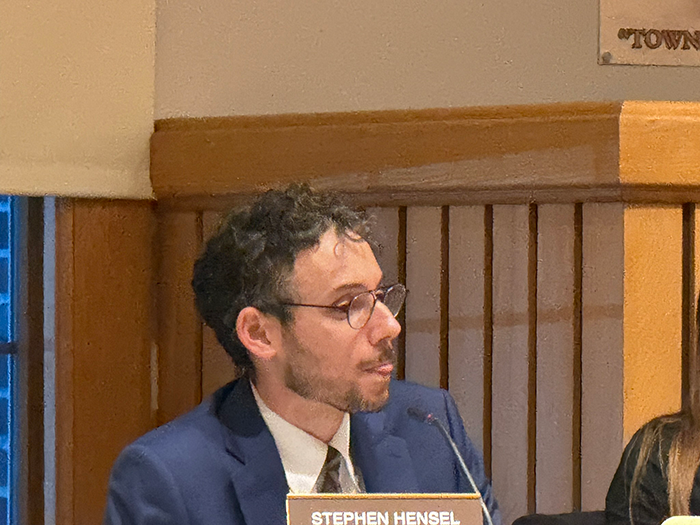
When the council finally voted, the results created confusion. The meeting also included multiple heated moments, with officials trading barbs that included cursing, name-calling, and, at one point, Rodrick shouting “coward” when Bianchini abstained from a vote.
The ordinance to rezone parcels near Lake Ridge resulted in Aber, Coleman, and O’Toole voting yes, while Ciccozzi and Bradley voted no. Nivison and Bianchini abstained.
A second ordinance involving township-owned property along Route 9 resulted in a tie vote. Aber, Coleman, and O’Toole voted yes. Ciccozzi, Bianchini, and Bradley voted no. Nivison abstained.
Township attorney Jonathan Penney said he would need to research whether the ordinances legally passed, given the abstentions. He did not respond to a request for clarification days after the meeting.
Rodrick offered his own interpretation. “They failed,” he said. “You need four affirmative votes.”
With the legal status of the ordinances still uncertain and the state deadline now passed, it remains unclear what happens next. If the township is ultimately found not to have adopted a compliant affordable housing plan, Toms River could face builder’s remedy lawsuits that could allow large-scale development with far less local control.
The post Blame Game Erupts Over Toms River Housing Plan appeared first on Jersey Shore Online.