
OCEAN COUNTY – Residents searching for food assistance, transportation, caregiving support or other services for older adults can help test a system designed to provide answers through a text message.
Ocean County has introduced an artificial intelligence-powered text line that allows residents to ask questions about local aging resources at any time and receive automated response. The system accepts questions in multiple languages, recognizes spelling errors and draws its answers from a controlled database of Ocean County information rather than searching the open internet.
Residents are being invited to test the Age-Friendly Ocean County Pilot Text Line by texting 848-266-6981. Their questions and feedback will help improve the system before a broader public launch.
The pilot was introduced as county and Rutgers officials unveiled the Age-Friendly Ocean County Multisector Plan for Aging, which organizers called the first county-level plan of its kind in New Jersey. The five-year roadmap is intended to help Ocean County prepare for a growing older population and address the conditions that affect residents’ ability to remain independent.
Dr. Emily Greenfield, founding director of the Rutgers Hub for Aging Collaboration, said the text line gives the county an opportunity to try a new way of connecting people with information.
“We do age-friendly together, and we do age-friendly with great joy,” Greenfield said. She described the pilot as an opportunity “to experiment, to learn and to try new things.”
The system is designed to answer questions such as how to obtain Meals on Wheels or whether transportation is available to a grocery store. The AI draws from a closed knowledge base containing information selected and supplied by those administering the platform.
Greenfield said the secure system is populated with information supplied by Ocean County’s age-friendly partners.
Bridge Social is the project’s technology partner, while Rutgers Cooperative Extension is administering the platform. The Grunin Foundation provided seed funding, and the Rutgers Hub for Aging Collaboration is evaluating the pilot.
Planning For An Older Ocean County
The text line is one of the first visible outcomes of an 18-month collaboration involving the Ocean County Office of Senior Services, Rutgers Cooperative Extension, county departments, healthcare providers, municipalities, nonprofit organizations, caregivers and residents.
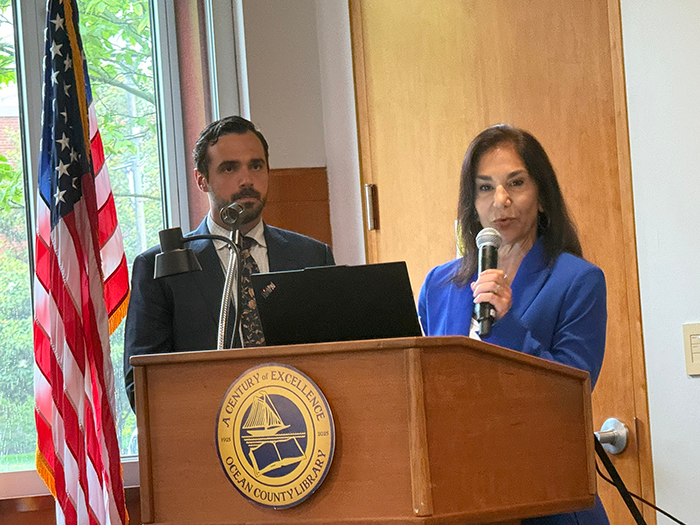
Marie LaFace, director of the Ocean County Office of Senior Services, said the process began after county commissioners adopted a resolution to join the AARP Network of Age-Friendly States and Communities. County funding allowed Rutgers Cooperative Extension to dedicate a full-time faculty position to the initiative, while additional support came through the New Jersey Division of Aging Services.
LaFace said more than 200,000 Ocean County residents are at least 60 years old. The county also has 93 age-restricted communities and what officials described as New Jersey’s largest “super senior” population.
“This is just the beginning,” LaFace said. “These numbers are only expected to grow.”
She said she initially believed Ocean County was already age-friendly because her department conducts annual needs assessments and oversees services intended to help older adults remain independent. During the planning process, however, she came to see the concept as much broader.
“This isn’t just about services. It’s about quality of life,” LaFace said. “Something as simple as a safe sidewalk or a ride to a store can make the difference between independence and isolation.”
“Age-friendly requires much more than what my department does,” LaFace added. “It requires us to evaluate our systems, our policies, our infrastructure and our environment.”
The plan addresses housing, transportation, healthcare, caregiving, economic security, food access, social participation and communication. It also incorporates the domains of livability used by the World Health Organization and AARP.
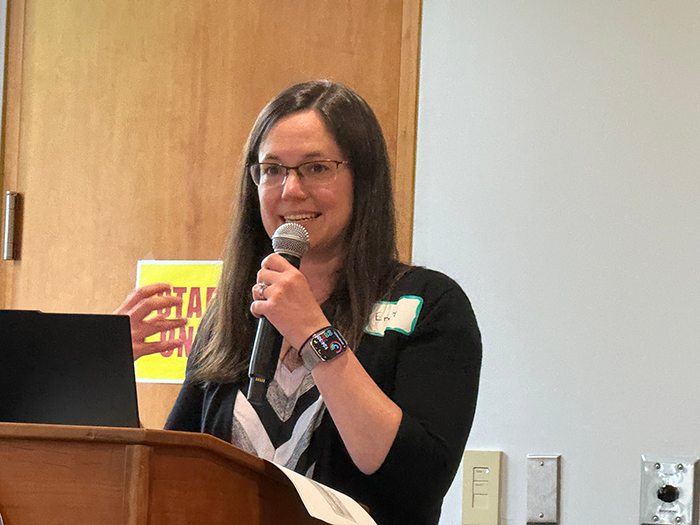
Dr. Kathleen Cullinen, a Rutgers Cooperative Extension educator and the plan’s principal investigator, said data from more than 8,000 surveys of residents, caregivers and people with disabilities contributed to the final document. Researchers also conducted town halls, interviews and focus groups across the county.
Cullinen said the goal was to identify steps that could produce early results while laying the groundwork for longer-term changes requiring additional resources. She said Ocean County’s work could serve as a model for other counties and for a future statewide plan.
Barriers To Independence
Focus groups documented how transportation, housing costs, health problems and caregiving responsibilities affect older adults’ daily lives. Janae Jackson, a community research specialist with 35th Street Consulting, said researchers conducted three focus groups involving 50 people of different ages, income levels and backgrounds.
Transportation emerged repeatedly as a major concern. One participant described a friend with cancer who had to choose between a single invasive procedure and a longer course of less invasive treatment. Transportation became the deciding factor because repeated trips for treatment would have been too difficult to arrange.
“People have to plan their healthcare around transportation, not the other way around,” Jackson said.
County Commissioner Robert Arace said the county is examining ways to improve Ocean Ride scheduling. Some reservation-based trips require approximately 14 days of advance notice, and commissioners hope to reduce that wait.
Caregiving was another significant concern. Some older residents are caring for spouses or parents in their 80s and 90s while facing physical, emotional and financial strain themselves. Participants described difficulties lifting family members, accessing medical information, obtaining equipment and finding affordable home health services suited to their needs.
Researchers also found that many older homeowners want to remain in their homes but struggle with property taxes, insurance, utilities, repairs and seasonal maintenance. Participants called for trustworthy home repair providers, help with chores and clearer information about available assistance.
“People who expected to retire reasonably comfortably struggle with the cost of living today,” Jackson said.
From A Plan To Action
Rutgers Provost Jason Geary said the plan reflects the university’s responsibility to apply research in ways that improve lives outside its campuses. He said transportation, safe housing, walkable communities, social opportunities and caregiver support may be especially important to older adults, but improvements in those areas benefit people of all ages.
“When we create communities that work better for older adults, we create communities that work better for everyone,” Geary said.
The plan will now move into a five-year period of implementation, evaluation and continued community engagement. Residents can participate immediately by testing the text line and reporting whether the answers are accurate and useful.
Residents can text the Age-Friendly Ocean County Pilot Text Line at 848-266-6981. More information about the plan is available at agefriendlyoceancounty.org.
The post Ocean County Tests AI Text Line For Senior Services appeared first on Jersey Shore Online.