

LACEY – Approximately 65 residents attended a recent special meeting as township officials spent more than two hours answering questions and hearing sharply divided opinions on a proposed YMCA community center. Throughout the evening, officials stressed that the project’s future ultimately rests with voters, who will decide its fate in a November referendum.
If approved, the referendum would authorize the township to finance construction of a YMCA on approximately 10 acres of municipally owned property between Lacey Road, Wawa and Gille Park. Under the proposal, Lacey Township would own the building while the Jersey Shore YMCA would operate the facility under a long-term lease that remains under negotiation.
Supporters said the proposal represents a rare opportunity to create a town center while expanding recreation, childcare, youth programming and senior services. Opponents said their concerns were less about the YMCA itself than the potential financial burden on taxpayers, the township’s long-term liability as the building’s owner and whether enough information has been released for voters to make an informed decision.
Township, YMCA Outline Vision
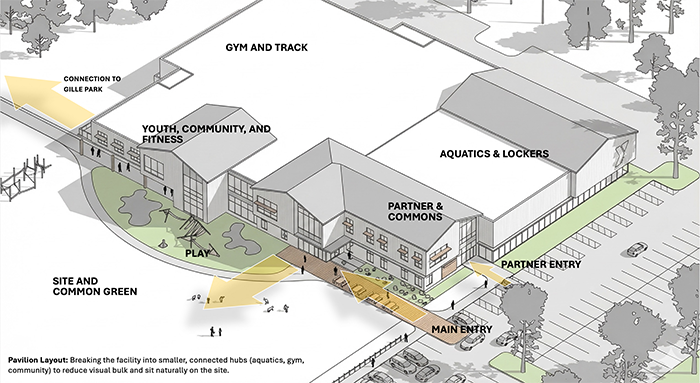
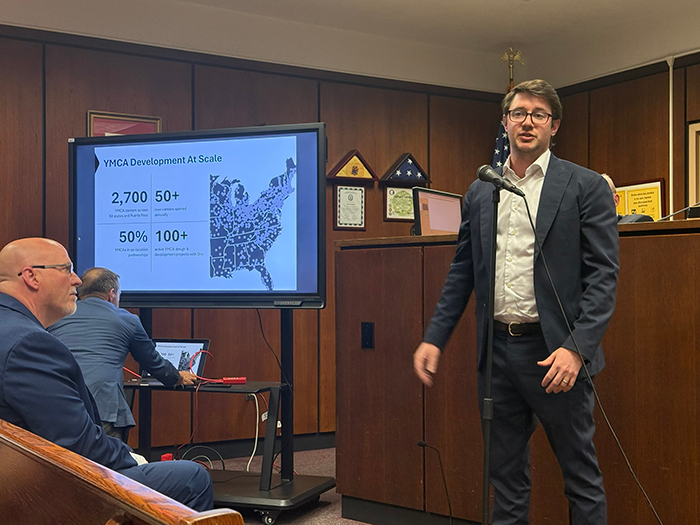
Mayor Steven Kennis opened the meeting by asking residents to consider the proposal objectively, as he introduced representatives of Gro Development Group who outlined their vision for the project. They described the proposed YMCA as a two-story community center that would include two pools, a gymnasium, walking track, fitness areas, meeting rooms, classrooms and childcare facilities.
Rod Grozier, a 35-year YMCA veteran and CEO of the Gro Group said the proposed YMCA would also offer youth employment opportunities, senior programming, mental health services and financial assistance for residents unable to afford memberships. A proposed community benefits agreement would provide discounted memberships for Lacey residents and businesses, scholarships, free lifeguard training and an advisory board that would include township representation.
Gro’s Danny Forrester said studies commissioned by the township found unmet needs in Lacey for indoor recreation, youth programming and senior services. He also cited an economic impact analysis projecting the facility would employ approximately 135 people while generating an estimated $2.4 million annually in wages and salaries, along with additional spending at surrounding businesses.
While the presentation focused on the project’s potential benefits, the public comment period quickly shifted to questions about long-term financial responsibility, liability and whether taxpayers have enough information before casting ballots.
Residents Want Answers Before Vote
Several residents said they support the YMCA’s mission but questioned whether the township should own the building.
Linda Kapitan said she has not yet seen enough information to decide how she will vote. She questioned who would be responsible for long-term maintenance, liability and security costs, and whether existing township facilities had been fully evaluated first.
Kapitan also questioned what would happen if the YMCA were unable to continue operating the facility years into the future. Kennis replied that the township would continue owning the building if that occurred, while acknowledging that long-term lease negotiations remain ongoing.
“I’m in no way ready to make a decision on a referendum because I don’t think there’s enough understandable information,” she said.
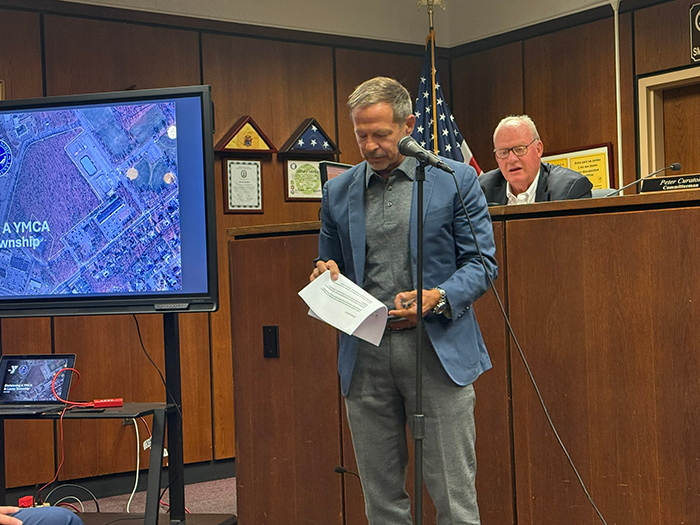
Kennis acknowledged that several key provisions of the proposed lease, including maintenance schedules and operating responsibilities, remain under negotiation. He said township officials expect to have additional information available before the referendum.
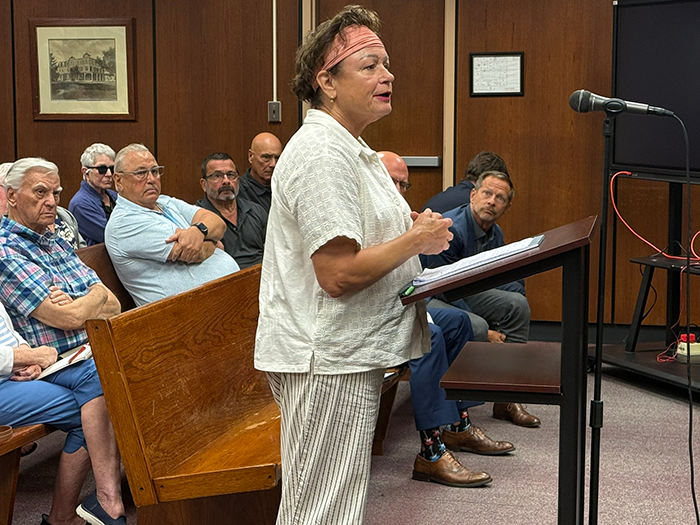
Local resident Patricia Doyle, a recently retired attorney, said she was not opposed to the YMCA itself but questioned the township’s role as landlord. Doyle said that commercial buildings inevitably generate lawsuits and argued residents should review draft leases, insurance provisions and indemnification agreements before voting.
“We need all the pro forma documents before we can vote,” Doyle said. “We want to see the contracts. They don’t have to be executed. We want to see what you’re thinking of.”
Doyle added that the township would never fully escape all liability and would need to carry separate insurance. According to township officials, because the building would remain municipally owned, it would be covered under the township’s joint insurance fund. Doyle questioned whether insurance disputes or uncovered claims could still leave taxpayers financially responsible.
Opponents Worry About Taxes
Steve Bahrle, who said he was speaking on behalf of Lacey taxpayers opposed to the YMCA tax increase, repeatedly emphasized that his group’s objections were financial rather than philosophical.
Bahrle questioned why the township should finance construction instead of leasing the property to the YMCA and allowing the nonprofit to build its own facility. He also argued residents have not received enough financial information to understand the project’s true long-term costs before voting.
Richard Bidnick of Lacey Citizens for Responsible Government said township officials should delay the referendum until every financial and operational question has been answered.
“I think it would have been more appropriate if you had waited until somewhere closer in August,” Bidnick said, arguing residents should have access to complete information before deciding the project’s future. He also questioned whether the township should undertake another major facility before addressing maintenance needs involving existing municipal buildings, parks and other public assets.
Supporters Focus On Community Benefits
Others argued the discussion should focus on the long-term value the YMCA could provide.
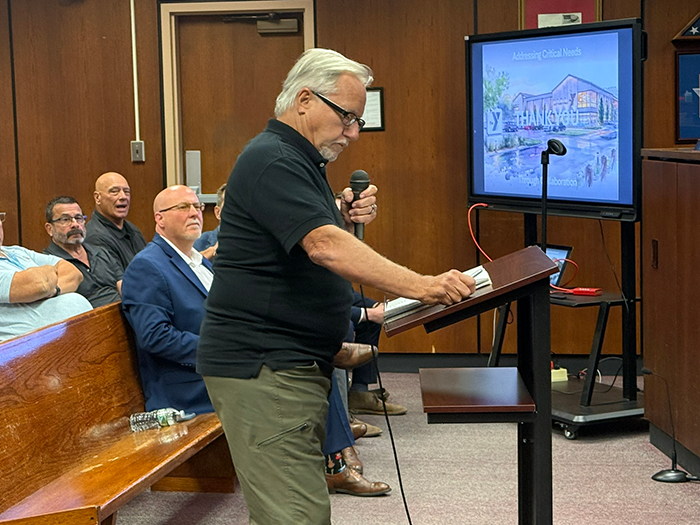
Daniel Krupinski, a Lacey resident and longtime public health professional, described the proposal as an investment in public health. “We invest very little in public health,” Krupinski said, arguing the YMCA would help address youth programming, senior wellness, recreation, mental health and social isolation while providing year-round indoor aquatics currently unavailable in Lacey.
Jeremy Grunin, vice chairman of the Jersey Shore YMCA Board, said approximately 40 percent of Lacey households fall into the ALICE category – Asset Limited, Income Constrained, Employed, meaning many working families continue to struggle financially despite being employed.
“The YMCA does not profit from the work that the YMCA is trying to do,” Grunin said. “This is your community center. The YMCA is the operator.”
Total Cost Of Planning
Following the meeting, Township Administrator Veronica Laureigh said approximately $164,000 has been spent on planning, public outreach and conceptual design.
According to Laureigh, the township paid $26,000 to Four Square Marketing for a community needs assessment, $25,000 to DBD Group for an economic impact study, $21,000 to marketing consultant Andrea Plaza for community outreach, and $92,000 to Gro Development Group for conceptual planning.
Laureigh said the community needs assessment, economic impact study and outreach efforts were paid for using the township’s opioid settlement funds, while the Gro Development Group contract was paid from the township’s reserve for land sales.
She noted that opioid settlement funds cannot legally be transferred into the township’s general operating budget and therefore could not have been used for other municipal expenses. Township officials said additional financial information, draft lease provisions and the final referendum language will be released before voters decide in November whether to authorize construction of the proposed YMCA community center.
The post Lacey YMCA Plan Divides Residents Ahead Of Vote appeared first on Jersey Shore Online.