
TOMS RIVER – For nearly 30 years, Ocean County has quietly spent pennies on the dollar preserving some of the last large stretches of forest, wetlands and open land in one of New Jersey’s fastest-growing regions. Now, county officials plan to ask voters whether they are willing to pay a little more on the open space tax that officials say protects water resources, habitats, and maintain large areas of preserved open space.
The Director of the Ocean County Commissioners Frank Sadeghi first raised the issue publicly when the county’s budget was adopted two months ago. At the county’s most recent commissioners meeting, Sadeghi shared additional details concerning a referendum planned for the November ballot.
The open space tax currently stands at 1.2 cents per $100 of assessed property value and has remained unchanged since voters first approved it in 1997. Sadeghi said commissioners believe the preservation program has become one of the county’s most important long-term investments as property values and land acquisition costs have steadily increased.
“We have preserved 30,000 acres of open space,” Sadeghi said while discussing the history of the program and the amount of land already protected through county preservation efforts.
Sadeghi said all commissioners support presenting the referendum question directly to voters this fall. “We’ll get a good sense as to whether the public is on board and they feel the same way that we do,” he said.
The discussion came during a meeting heavily focused on county infrastructure spending and capital projects. Commissioners approved ordinances involving road improvements, bridge replacements, stormwater management projects, intersection upgrades and sidewalk improvements totaling roughly $70 million. Sadeghi used the discussion to emphasize the scope of county operations and the amount of work associated with maintaining and improving infrastructure throughout Ocean County.
“We’re fortunate that we have the resources where we can spend the money and improve the lives of the residents of Ocean County,” Sadeghi said. “Whether it’s widening roads; whether it’s improving the park system.”
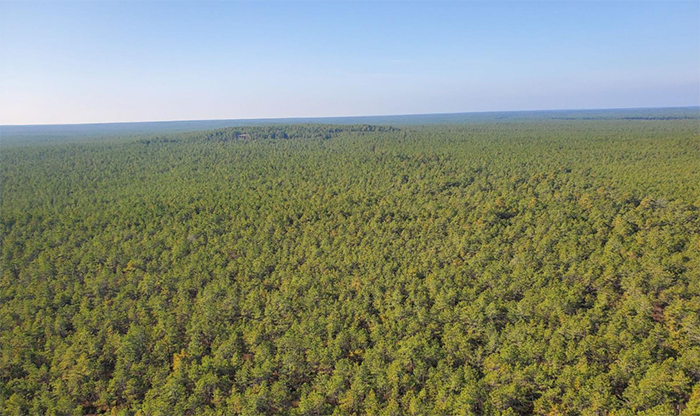
At the same meeting, commissioners approved the acquisition of approximately 128.3 acres on Long Swamp Road in Plumsted through the Ocean County Natural Lands Trust program. The purchase represented another example of how the county continues using preservation funds to acquire wooded tracts, wetlands and other environmentally important properties throughout the region.
New Open Space Website
As part of the campaign leading up to the referendum, Ocean County launched a new website explaining the history of the Natural Lands Trust Fund and the proposed tax increase. County materials state that more than 30,000 acres have already been acquired as open space since voters approved the tax in 1997 and note that while the tax rate has remained unchanged for decades, the cost of purchasing land has increased dramatically.
The website includes an interactive calculator allowing residents to enter their property assessment and estimate what the additional penny would cost annually.
“If you know the value of your property in your house, you can actually put that on there and determine what that additional penny is going to cost you on the taxes,” Sadeghi said.
According to Sadeghi, the additional penny would generate approximately another $20 million annually for preservation projects and related improvements.
What The Tax Increase Would Cost
If voters approve the referendum, the open space tax would increase from 1.2 cents to 2.2 cents per $100 of assessed property value. County estimates show the increase would raise the annual cost from approximately $48 to $88 for a home assessed at $400,000. A property assessed at $600,000 would increase from approximately $72 to $132 annually, while a home assessed at $800,000 would rise from roughly $96 to $176 per year.
County officials say the additional funding would help continue acquiring wetlands, forests and other environmentally sensitive land while also potentially assisting with park and recreation improvements.
Sadeghi acknowledged during the meeting that officials understand many residents, especially seniors living on fixed incomes, are already struggling financially. He said commissioners spent months discussing the proposal before deciding to move forward. Whether voters ultimately approve the proposal will likely depend on how they balance the added financial cost against the long-term value of preserving forests, marshes, waterways and open land throughout Ocean County.
Why Officials Say Preservation Matters
County officials insist the open space program is about far more than simply preventing development. Planning materials tied to the Natural Lands Trust repeatedly emphasize protecting drinking water supplies, wetlands, wildlife habitats and environmentally important lands.
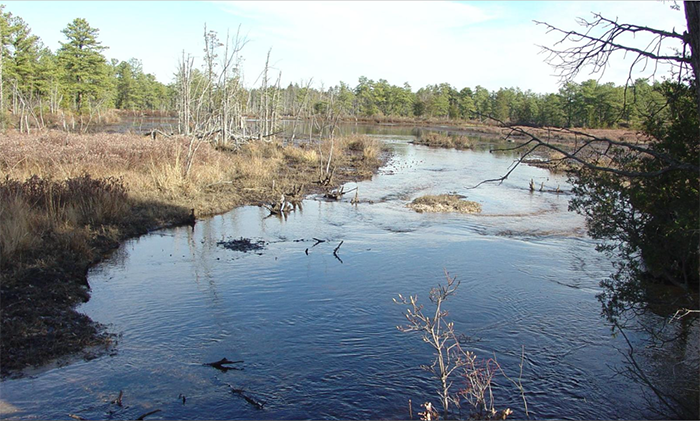
“Of particular importance to the residents of Ocean County is protecting water resources,” county materials state. One major focus has been the Toms River Corridor, where preserved lands help protect tributaries feeding Barnegat Bay. County records note the watershed contributes roughly one-quarter of the freshwater entering the estuary and supports numerous threatened and endangered species.
In Stafford Township, acquisitions through the Natural Lands Trust helped create the Manahawkin Marsh Preserve, which now spans roughly 350 acres along the Route 72 corridor leading to Long Beach Island. The preserve serves as a natural marsh buffer while protecting wetlands and wildlife habitat.
The county’s largest acquisition came in 2019 when Ocean County preserved 7,923 acres in the Forked River Mountains region spanning Barnegat, Lacey and Ocean townships. The heavily forested tract contains some of the highest elevations in southern New Jersey and connects large sections of preserved Pine Barrens habitat.
Other preserved lands include portions of the Cedar Creek corridor in Berkeley, where county officials continue pursuing acquisition opportunities adjacent to the Barnegat Branch Trail and Cedar Creek Campground because of the environmentally sensitive nature of the area.
Preservation efforts have additionally extended around Joint Base McGuire-Dix-Lakehurst, where more than 4,200 acres have been protected within two miles of the base while also preserving forests and wildlife habitat.
Rules Governing Open Space Lands
Ocean County’s preserved lands are governed by rules designed to balance public access with environmental protection. County regulations permit activities such as hiking, fishing, kayaking and hunting in designated areas while prohibiting dumping, destruction of vegetation, unauthorized structures, off-road vehicles and camping without permission.
The county also reserves the right to temporarily close Natural Lands Trust properties during drought conditions or environmental emergencies, including wildfire threats.
The Surf & Stream Controversy
Not every preservation acquisition has been welcomed.
One of the most controversial involved Surf and Stream Campground in Manchester, where former residents are currently involved in litigation after the county acquired the property for preservation purposes.
County officials were led to believe they were purchasing a seasonal campground but later discovered many people had been living there year-round for years. Former residents said families received mail there, children were picked up by school buses there and some residents had lived there for decades.
More than 70 former residents are parties to ongoing litigation alleging they were displaced without proper relocation assistance after the sale. County officials have denied wrongdoing.
The post Ocean County Open Space Tax Increase Heads To November Ballot appeared first on Jersey Shore Online.