

TOMS RIVER – Toms River’s proposed $142.2 million budget would keep the municipal tax rate unchanged for a fifth consecutive year while reducing spending and paying down debt, though final adoption has been pushed to July because of a state-required budget amendment.
Mayor Daniel Rodrick, who took office in January 2024, said the proposal represents the third consecutive budget introduced under his administration without a municipal tax increase.
“Three years ago, we set out to prove that government could spend less, accomplish more, and protect taxpayers at the same time,” Rodrick said in a statement released following the June 10 budget hearing. “Today, we are delivering on that promise. Taxes remain flat for the third consecutive year, spending remains significantly below the level it was when I took office, and we are making historic investments in our community without asking residents to pay more.”
According to the Ocean County Board of Taxation, Toms River’s municipal purpose tax rate has remained unchanged at 43.7 cents per $100 of assessed valuation since 2022 and would remain at that level under the proposed 2026 budget.
The proposed spending plan is down from roughly $146 million in 2025. Township auditor Jerry Conaty, a partner with Holman Frenia Allison, said much of the reduction stems from lower debt service costs.
“The real big reason for that decrease is the savings in debt service,” Conaty told council members. “We’re down about $3.26 million in debt service between the two years.”
Conaty said the state required the township to revise several accounting classifications within the budget. The amendment shifts revenues and appropriations among various categories but does not change the overall budget, tax levy or tax rate.
Town Taxes 21% Of Total Bill
The average assessment for a home in Toms River is $450,600, according to the budget presentation. Under the proposed budget, the municipal portion of the tax bill would remain $1,969.12.
Overall property taxes on that same home average approximately $9,561.73, meaning municipal government accounts for only about 21 percent of the total tax burden. Schools account for approximately 55 percent of the bill, while county government represents another 21 percent. The remaining amount supports fire districts, special improvement districts and open space taxes.
Under state law, towns collect the taxes for all of these agencies and then dole them out.
Surplus And Rising Costs
Township officials pointed to a growing surplus as one of the strongest indicators of the municipality’s financial position. Even after utilizing approximately $17 million in surplus to support the 2026 budget, officials project an ending balance of roughly $55 million.
“Our financial position is stronger than it has ever been,” Rodrick said. “A record surplus, lower debt, and controlled spending provide stability for taxpayers while ensuring that we can continue investing in critical projects throughout our community.”
Despite the flat tax rate and reduced overall spending, several municipal expenses continue to rise.
Health insurance remains one of the fastest-growing costs in the budget, increasing from approximately $20.4 million in 2025 to about $22.45 million in the proposed 2026 budget. Employee salaries also continue to increase under collective bargaining agreements.
Rodrick told council members the township has continued to honor labor agreements while maintaining stable taxes. “We were investing in our workforce and helping them to combat inflation while we continue to do the right thing by taxpayers,” he said.
Capital Projects Continue
The budget includes funding for a variety of infrastructure and recreation projects throughout the township. According to the budget presentation, plans include paving more than 15 miles of roadways, installing tidal check valves on more than 70 roads to reduce flooding, replacing playground equipment at Bey Lea, Winding River and Skyview parks, continuing Ortley Beach boardwalk and streetscape improvements and completing design work for several new parks and spray parks.
“These projects demonstrate that taxpayers do not have to choose between affordability and progress,” Rodrick said. “We are improving roads, addressing flooding, expanding recreational opportunities, and investing in our neighborhoods while keeping taxes flat.”
Debate Over Staffing And Services
While township officials said debt reduction, surplus growth and spending controls maintained the flat tax rate, several council members and residents argued the savings came with tradeoffs.
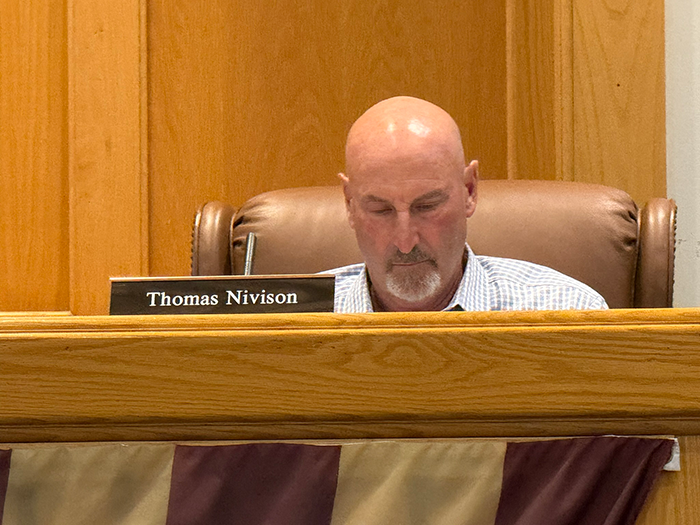
Council Vice President Thomas Nivison contended that cuts to staffing and the services to residents have contributed to the township’s ability to avoid a tax increase.
“Staffing and code enforcement, police, animal shelter, the list goes on and on, that’s how the flat rate has been obtained,” Nivison said.
His comments echoed concerns raised earlier this year when a council majority approved an ordinance requiring the township to maintain a minimum staffing level of 162 sworn police officers. Supporters of the ordinance cited declining staffing levels and increasing calls for service. Rodrick vetoed the measure, arguing that staffing decisions fall within executive authority under the Faulkner Act and should not be dictated by ordinance.
The proposed 2026 budget includes funding for 14 additional police officer positions. Rodrick told the council the township is actively hiring.
“As of last night, we hired six new cops,” he said. “Five are supposed to start next week.”
The mayor said all six are already certified officers, allowing them to begin work immediately rather than spending months in a police academy.
“We continue to fill all positions until maximum,” Rodrick added.
Resident Julie Adamek echoed concerns about municipal staffing and services. She said information residents need, including animal licensing requirements, appeared to be missing from the township website and urged officials to restore it.
Adamek argued what she described as inadequate code enforcement has allowed neglected properties to proliferate throughout town. She described overgrown and vacant properties in her neighborhood and said deteriorating conditions can contribute to crime and declining neighborhood quality.
“This is not just a matter of esthetics. This is also increasing crime rates across town,” she said.
Adamek further questioned whether reduced police staffing and traffic enforcement have contributed to a growing number of accidents on local roadways and criticized township spending on concerts, tribute bands and fireworks, arguing the money could be better spent on core municipal services.
“I don’t look at township recreation as fluff,” Rodrick said. “I look at something for the taxpayers, for their families, for their children.”
Nivison suggested some recreation spending could be redirected toward enforcement efforts. “I think we could redirect some of the money that’s going to the splash parks that nobody actually wants for code enforcement,” he said.
The budget is expected to return to the council in July for final adoption following the required public hearing on the state-mandated amendment.
The post Toms River Budget Keeps Taxes Flat Amid Staffing Debate appeared first on Jersey Shore Online.