
TOMS RIVER – Seven candidates are competing for three, three-year terms on the board of education this election season.
School board candidates are not allowed to put their political affiliation on the ballot. Instead they use short slogans. Ashley Lamb, Gerard Nappi and James Capone are running under the “Protect What Matters” slogan. Laura Picurro, Anthony L. Colucci, and Elizabeth Huber are running under the “Finance, Education, Accountability” slogan. Kristin Hanson ran under “Educating Students Responsibly” but could not be reached. Capone did not return his questionnaire by deadline.
They were all asked about their experience and goals. Their answers are presented here, lightly edited for such things as punctuation and clarity. Larger cuts were made to remove redundant answers or to fit space.
Anthony L. Colucci
Colucci is retired after more than 40 years in finance and accounting in companies both large and small. “Regardless of size control of budgets, monitoring expenses and recommending corrective actions were the focus of my career.”
He the President of the Ortley Beach Voters and Taxpayers Association and is a member of the Toms River Zoning Board of Adjustment. He previously, served on the Toms River Environmental Commission and the Old Bridge Arts & Culture Commission.
“The biggest issue I see is financial accountability. Our campaign has pointed out that school taxes have increased approximately 30 percent over three years, representing roughly $55 million more annually, yet the district has continued to experience significant financial problems. The situation became so serious last year that the Board authorized taking steps to explore Chapter 9 bankruptcy protection.
“As a retired Senior Management Executive, that immediately raises questions for me. When revenues increase substantially and an organization continues to experience financial distress, you have to examine the entire financial picture and understand exactly where the money is going.

“I also believe compensation and administrative spending deserve scrutiny. At a time of significant financial challenges, the Board approved a new superintendent’s contract that increased his salary from approximately $228,160 to $308,012 in the final year. That’s an $80,000 raise right after the district explored bankruptcy.
“Meanwhile, our campaign has cited state testing data showing approximately 53 percent of students are not proficient in literacy and 67 percent are not proficient in mathematics.
My approach would be the same disciplined approach I used professionally: examine expenditures, identify unnecessary costs, evaluate staffing and administrative overhead, improve long-term financial planning and demand measurable results.
“Taxpayers deserve to know where their money is going, and parents deserve to know that our financial decisions are helping their children succeed.”
“I would like to bring a much more systematic financial review process to the district.
In my experience, I don’t believe a budget should be something an organization examines once a year and then puts on a shelf. Financial performance should be monitored throughout the year, expenditures should be compared against projections, and significant variances should be explained to the Board and the public.
“When taxpayers have experienced approximately a 30 percent increase in school taxes over three years – roughly $55 million more annually – and the district has nevertheless faced a financial crisis serious enough to consider Chapter 9 bankruptcy protection, I believe taxpayers are entitled to a comprehensive examination of district finances.
“I would like to see administrative positions, contracts and major expenditures reviewed to determine whether they are necessary and whether they are producing results. I would also like major spending proposals to include clear explanations of their long-term costs rather than focusing only on the first year’s expense.
“Most importantly, I want financial decisions connected to measurable educational outcomes. If we spend money on a new program intended to improve mathematics or literacy, we should establish what improvement we expect and then determine whether we achieved it.
“My goal isn’t simply to cut. It is to manage. We should eliminate unnecessary expenditures, protect what works, put resources into classrooms and give taxpayers much greater transparency about how their money is being used.”
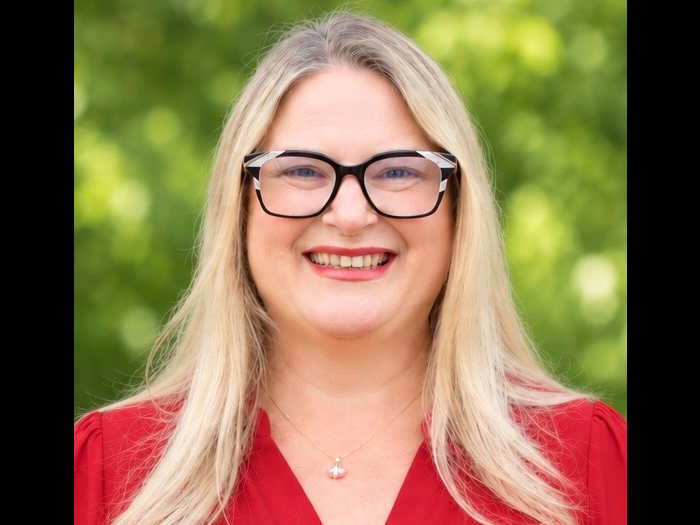
Elizabeth Huber
Huber is “an experienced educator and workforce development professional with a blended background in skills training, job readiness instruction, and disability support services. In my current role with APL Associates, I provide pre-employment transition services to high school students and deliver individualized job coaching for individuals with disabilities, supporting them through pre-placement, workplace training, and long term skill development.
“Previously, I served as a CASAS Instructor for Equus Workforce, helping adult learners strengthen literacy, numeracy, and workforce competencies. I also bring several years of classroom experience from Saint Joseph Grade School, where I taught 3rd and 5th grade and utilized my Students with Disabilities certification to deliver differentiated instruction and inclusive learning support. My teaching career began at Ocean Gate Elementary as a paraprofessional, assisting students with academic, behavioral, and individualized needs. I also worked at the Girl Scouts of America as a Program Specialist.”
If elected, this would be her first role in public office.
“As a Program Specialist for the Girls Are Great Program at the Girl Scouts and through work supported by an additional Title I grant for the Girl Scouts of America, I contributed to community-focused initiatives that promote youth development, educational access, leadership skills, and equity for underserved populations,” she said.
“The biggest issues facing our district are student achievement and making sure that the significant amount of money taxpayers are investing in our schools is actually reaching our classrooms.
“Our campaign has pointed out that school taxes have increased approximately 30 percent over three years, representing roughly $55 million more annually. Yet despite those increases, our district has continued to experience serious financial problems. Last year, the situation became so severe that the Board authorized exploring Chapter 9 bankruptcy protection.
“As a retired teacher, what concerns me most is what our students are getting in return. Recent state testing data cited by our campaign shows that approximately 53 percent of our students are not proficient in literacy and 67 percent are not proficient in mathematics. Those numbers should concern every parent and taxpayer.
“I spent my career in education, and I know that teachers need resources, support and reasonable classroom conditions to succeed. I want to examine where our money is going and make sure our priorities begin with students and classrooms.
“We need to look carefully at administrative spending and positions and ask whether every expenditure is necessary and whether it contributes to educating our children. I believe we can demand fiscal accountability while also demanding better academic results. Those two responsibilities go hand in hand.”
“I would like to establish a much stronger connection between the decisions made at the administrative level and what is actually happening inside our classrooms.
“As a retired teacher, I know that spending more money does not automatically produce better educational outcomes. We have seen substantial increases in school taxes, yet the academic performance figures cited by our campaign show that approximately 53 percent of our students are not proficient in literacy and 67 percent are not proficient in mathematics. We need to make improving those numbers one of our highest priorities.
“I would like the Board to routinely examine student achievement data, identify the areas and grade levels where students are struggling, and then determine whether our curriculum, programs and spending decisions are actually addressing those problems.
“I also want teachers to have a meaningful voice in that process. The people working with our children every day often know which programs are effective, where resources are lacking and where money is being spent without producing meaningful classroom benefits.
“Before creating another administrative position or approving another major expenditure, I want us asking: How will this help our students?
“My goal would be to redirect unnecessary administrative spending toward instruction and classrooms and then measure whether those investments are improving student achievement. Our budget should ultimately be an educational document that reflects what we are trying to accomplish for our children,” she said.
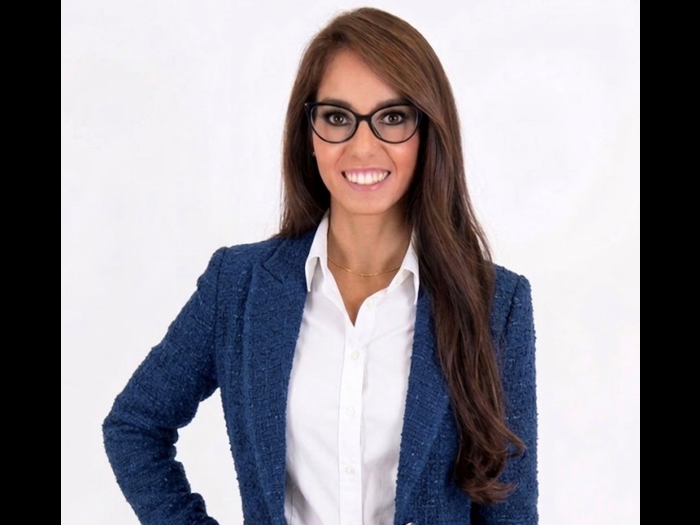
Ashley Lamb
Lamb is Deputy Ocean County Clerk and a small business owner. She has served two terms on the board of education, and is currently its president.
“I was a former Project Manager of a 501c3 that helped Ocean County residents recover from Superstorm Sandy. I am a member or associate member of several municipal clubs in Ocean County. I currently hold Executive Board seats in two recognized political clubs in Ocean County.
“The biggest issue facing Toms River Regional Schools is the massive theft of school funding that we have been and continue to suffer. Unfunded mandates created by our NJ State government, coupled with funding cuts, secret funding formulas, and uncapped out of district tuitions have created a fiscal cliff over years that resulted in state implemented tax increases which were then blamed on the local districts throughout Ocean County. As a Board, and an Administration, Toms River tried to play it safe in hopes that Trenton would be fair to our children and community, that backfired and we have to move forward with new plans.
“Our plan to address the situation and keep taxes from increasing any further is to open a special education academy to create in house experiences for our medically fragile population, and bring out of district programming home to Toms River. Primarily because this is what is best for children, also to save tax dollars, and begin to generate our own source of revenue that is not linked to tax increases and not controlled by Trenton.
“We have also begun and will continue to reduce unnecessary administrative costs, cut spending in places that do not affect student outcomes, and offload responsibilities that have nothing to do with educating kids. Selling unused land to municipal and county governments keeping the properties in the hands of the taxpayers, yet reducing the strain on the district to manage them. Smart management, supporting our outstanding teaching staff who have in turn supported these children is what has kept our programs intact and allowed us to do more with less. Moving into this fiscal year the plan is to continue to safeguard our student experience, our buildings, our programs, our staff, and prevent any state forced tax increases.
“I am so happy to say that this year we introduced some new student driven programming (shoutout to Mollea G.) with flag football, and that is all I could ever want. A district that listens to their students, their staff, their parents and community, and responds. We are able to do this because of our amazing staff who are always ready to step up when they are needed. That is what “We are TR” is all about. I want to keep providing whatever it is that these kids and families want and need.”
Gerard Nappi
Nappi is a full-time remote employee and Vice President of Strategic Relations at MicroTech LLC. “My only public experience is service as the District 29 Republican Committee Representative, a position I have held since June 2026.”
“I have volunteered for beach cleanups and have coached both youth football and youth softball,” he said.
“The biggest issue facing the district is funding pressure from Trenton. When state aid is cut or fails to keep up with costs, the gap does not go away. It shifts onto local taxpayers and onto the programs families expect the schools to provide. That is not a sustainable way to fund a district.
“A second problem is the cost of students educated outside the district. Out-of-district placements and enrollment shifts can take a large share of the budget, often with limited local control over the price. Money spent outside town is money that cannot support classrooms, staff, and services in our own schools. The aim should be to bring students back whenever a sound in-district program can meet their needs, and to make those programs strong enough that families choose them.
“I would treat both issues as budget problems the board can manage, not simply pass through. That means a clear accounting of what out-of-district placements cost and why each one is required, a serious look at which services can be delivered well inside the district, and steady pressure on Trenton to stop shifting costs onto local homeowners. Residents should be able to see, in plain language, where the money goes and whether it is improving results for students who live here.

“I want the board to look harder for practical ways to raise optional revenue and cut expense without cutting what students actually need. The goal is to keep property taxes as low as possible while still running a sound school system.
“A regular review of contracts and administrative costs should be routine. Programs that are not producing results should be reconsidered before anyone asks homeowners for more. On revenue, the district should pursue appropriate grants, facility use fees, and other non-tax sources that do not depend on another increase in the local levy.
“Every new idea should be judged by two tests: whether it educates students well, and whether it leaves more money in homeowners’ pockets. Families in this district already carry a heavy local burden. The board’s job is to manage that burden, not add to it.”
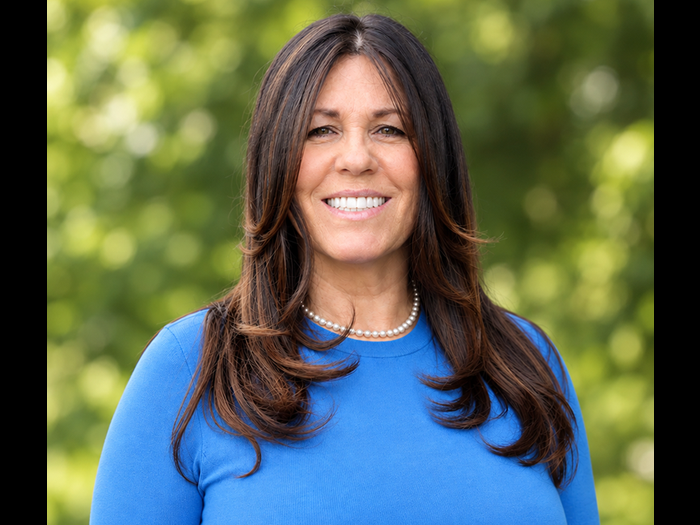
Laura Picurro
“I am the Director of Health and Human Services for the Township of Toms River and I oversee the Toms River Senior Center and Senior Services. I have worked in senior services for 14 years, helping residents access programs, benefits, transportation, and other essential services,” she said.
If elected, this would be her first time in public office.
“Community involvement has been a major part of my life. My late husband, Joe, was a volunteer first responder at Ground Zero after the September 11th attacks, and as his health declined, I became involved with 9/11 support groups, including the early days of the FealGood Foundation, which worked to bring attention to first responders who became sick after working at Ground Zero. Our fight was not only for Joe, but for medical care, benefits, and recognition for the many first responders and families who were facing the same battle.
“During the last year of my husband’s life, when my family needed help, the Toms River community came together for us. Their support allowed us to focus on Joe and spend precious time together as a family during the final year of his life. I have never forgotten what this community did for my family. It is one of the reasons giving back to Toms River means so much to me.
“I am also active in my church community and have worked with senior communities throughout Ocean County, providing outreach and connecting older adults and their families with programs, benefits, and services.
“I currently serve as the Municipal Alliance Coordinator for the Township of Toms River. In that role, I work with community partners to identify evidence-based prevention and education programs for youth, families, and seniors.
“I believe the biggest challenge facing our district is balancing the needs of students with the responsibility we have to taxpayers. We have to provide our children with a strong education, safe schools, and the resources they need to succeed, while recognizing that families and seniors cannot continue to absorb increasing costs without asking where the money is going and what results we are getting.
“Over the past three years, the district’s general fund tax levy has increased by approximately $55 million, from about $168 million to nearly $223 million. Despite taxpayers contributing significantly more, the district has continued to face serious financial difficulties. In 2025, the Board authorized the administration to begin the process of seeking Chapter 9 bankruptcy protection if necessary. That makes fiscal responsibility and accountability even more important.
“State funding continues to be a major issue for Toms River, and we must continue advocating for our district to receive its fair share. At the same time, more funding cannot replace fiscal responsibility. Every dollar should have a purpose, and our first priority should be the students.
“Student achievement is equally important. I want to look closely at the data, identify where students are succeeding and where they are struggling, and ensure the programs being funded are producing results. If something is working, we should build on it. If it isn’t, we need to ask why and make changes.
“In my current position, I manage public programs, grants, and budgets, and I am accountable for how those funds are spent. I understand the need to make difficult decisions, establish priorities and do more with the resources available.
“I plan to bring that same approach to the Board. I will advocate for the funding Toms River deserves while making sure we are responsible with the money taxpayers are already providing.
I have spent years listening to residents’ concerns and finding solutions. I will ask questions, look at the facts, and make decisions based on what is best for the students and our community.
All children deserve an excellent education, and all taxpayers deserve accountability. I am here for the people, not the establishment,” she said.
“One thing I would like to bring to our district is stronger communication, greater transparency, and accountability.
“In my current position, I work directly with residents every day. I believe public service means listening to people, returning phone calls, answering questions, and helping people find solutions. Even when the answer is not what someone wants to hear, they deserve an explanation, and they deserve to be treated with respect. I would like to see that same philosophy throughout our school district.
“Parents should feel that they have a voice and know where to turn when they have a concern. Teachers and staff should feel heard as well. Communication should not only happen when there is a problem. I would like to see more consistent communication between the Board, the administration, educators, parents, and the community.
“I would also like to make information easier for the average resident to understand. School budgets and financial documents can be complicated, but residents shouldn’t have to go through hundreds of pages to understand how their tax dollars are being spent. When the district makes a major financial decision, introduces a new program, or makes a change that affects everyone, the community deserves to know why that decision was made, what it will cost, and how it will benefit students.
“Finally, I believe in follow-through. If we invest in a program, we should measure the results. If parents raise a concern, it should not disappear after a meeting. If we identify a problem, we should continue working on it until we have an answer,” she said.
The post Seven Run For Three Toms River School Board Seats appeared first on Jersey Shore Online.